
Job
Plasterer
- Department
- Construction / On-Site
- Earning potential
- £21,000–£38,000
- Training time
- Level 2 Plasterer apprenticeship: typically 24 months plus assessment
Plasterers give the walls and ceilings of new homes the smooth, durable surfaces needed for decorating.
Their work makes a visible difference to the finish of each room and helps bring a development closer to handover.

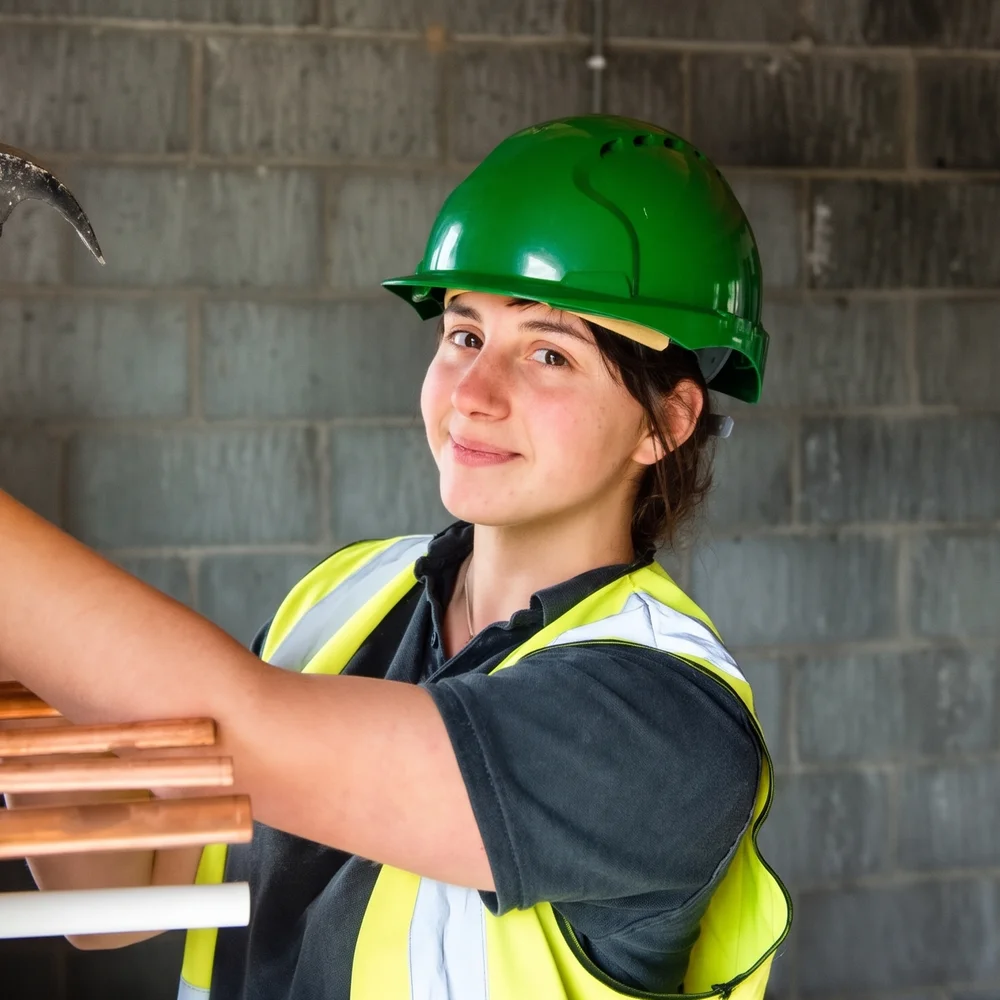
I like how creative it can be. Being in control of the finished product and having the responsibility to carry out your own work is really rewarding.
Maisie
Plasterer introduction
Plasterers give the walls and ceilings of new homes the smooth, durable surfaces needed for decorating. Their work makes a visible difference to the finish of each room and helps bring a development closer to handover.
The role of a plasterer in house building
In house building, plasterers prepare backgrounds, apply plaster and finishing coats, and make surfaces ready for painting or other decoration. They may also work on external rendering or specialist finishes, depending on the employer. Quality depends on preparation, consistency and accurate finishing around corners, openings and fittings.
A day in the life of a plasterer
A plasterer may start by checking the condition of walls and ceilings, protecting adjacent areas and preparing materials. The day can include mixing plaster, applying coats, ruling off surfaces and finishing them to the required standard. Working efficiently matters because drying time and follow-on trades affect the build programme.
Skills for a plasterer
The skills below help people succeed in this role on residential developments.
- Practical technique — Even application and finishing produce a consistent surface.
- Attention to detail — Visible imperfections can affect decoration and customer satisfaction.
- Physical stamina — Plastering involves repeated movements and prolonged standing.
- Measuring and preparation — Correct quantities and suitable backgrounds reduce waste and defects.
- Time management — Plaster needs to be applied and finished within working times.
- Teamwork — Coordination with dry liners, electricians and decorators keeps plots moving.
Routes into plasterer work
Many plasterers enter through a Level 2 apprenticeship that combines training with site experience. A college plastering course may also help you secure a trainee role. Some workers develop skills alongside experienced plasterers before progressing to recognised qualifications.
Qualifications and training
The current Skills England Level 2 Plasterer apprenticeship includes solid and fibrous plastering options and typically involves 24 months of training plus assessment. Employers may also request evidence of site competence and suitable health and safety training. Check the current standard before applying.
Plasterer pay and earning potential
The National Careers Service provides an indicative annual salary range of £21,000–£38,000 for the closest occupational profile. Actual earnings vary by experience, location, employer, employment type and any specialist responsibilities.
Career progression
With experience, plasterers can take responsibility for a team or become a plastering supervisor or foreperson. Some develop specialist finishing or heritage skills; others establish a plastering business or train apprentices.
Explore our career progression guide to understand how experience can lead to greater responsibility in house building.
Find plasterer opportunities
House builders and specialist finishing contractors recruit trainee and qualified plasterers for new-home developments. Explore employers and subcontractors working on residential construction projects.
Plasterer FAQs
A plasterer prepares and finishes walls and ceilings so they are ready for decorating. On new homes, the role is especially important during the internal finishing stages.
An apprenticeship is a common route, combining practical site work with structured training. College courses and supervised trainee positions can also help people get started.
The National Careers Service lists an indicative annual range of £21,000–£38,000. Pay depends on experience, location and whether work is employed or self-employed.
Yes. Dry lining commonly involves fixing plasterboard systems, while plastering focuses on applying and finishing plaster surfaces. The activities can overlap on some projects.
Plasterer career path
- Trainee Plasterer
- Plasterer
- Plastering Supervisor /Foreman