
Job
Plumber
- Department
- Construction / On-Site
- Earning potential
- £24,000–£46,000
- Training time
- Plumbing and domestic heating technician apprenticeship: duration varies by current approved standard
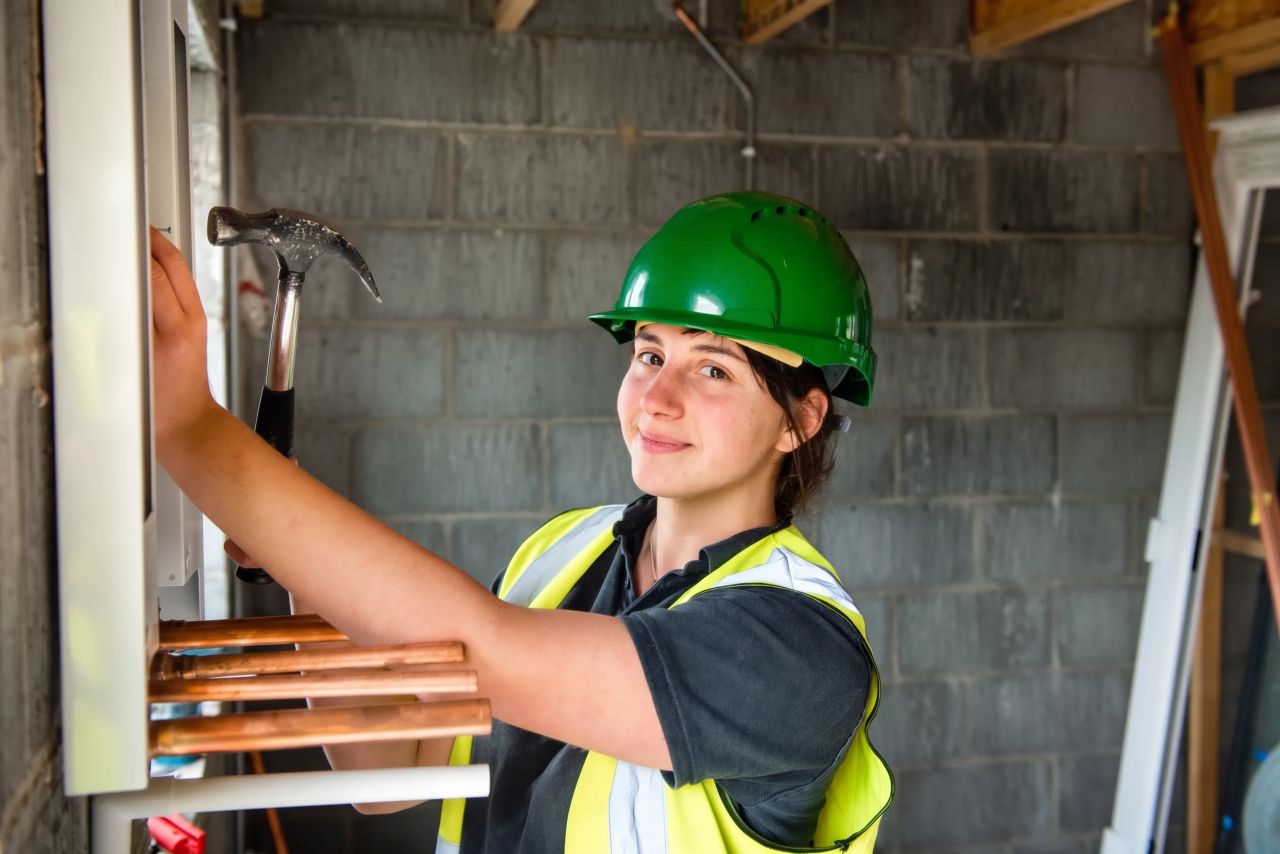
Plumbers install the water, drainage and often heating systems that make new homes comfortable and practical.
Their work is essential from the early installation of pipework to the final testing of bathrooms, kitchens and other fittings.

Learning on site and being given the responsibility on site to work as an actual plumber. I’m not good at learning from a text book so this really works for me.
Chris

Plumber introduction
Plumbers install the water, drainage and often heating systems that make new homes comfortable and practical. Their work is essential from the early installation of pipework to the final testing of bathrooms, kitchens and other fittings.
The role of a plumber in house building
On a housing development, plumbers interpret drawings, position and join pipework, install sanitary fittings and check that systems work correctly. Depending on their training and employer, they may also work on domestic heating and low-carbon technologies. Their work must be coordinated with structural layouts and other trades before finishes are completed.
A day in the life of a plumber
A day could involve checking a plot schedule, installing hot and cold water pipework, fitting drainage connections, preparing bathroom services or testing completed systems for leaks. Plumbers may return later to install basins, toilets and taps, check performance and resolve defects before handover.
Skills for a plumber
The skills below help people succeed in this role on residential developments.
- Pipework skills — Accurate measuring, cutting and jointing prevent leaks and failures.
- Technical understanding — Plans and system requirements determine safe and effective installations.
- Problem solving — Routes for services must work around real site constraints.
- Attention to detail — Leaks and poor connections can cause damage after completion.
- Communication — Plumbers coordinate with electricians, carpenters and site managers.
- Safety awareness — Safe tools, materials and procedures protect workers and future occupants.
Routes into plumber work
A plumbing and domestic heating apprenticeship is a common route. College courses can build introductory knowledge and help candidates find trainee opportunities, but practical workplace experience is essential. Some people progress from related building services roles.
Qualifications and training
Skills England publishes the Plumbing and Domestic Heating Technician apprenticeship standard, covering water, drainage and heating systems. Work on gas appliances requires the appropriate legal competence and Gas Safe registration; a general plumbing qualification alone does not authorise gas work. Requirements for heat pumps and other specialist systems also depend on the work undertaken.
The Gas Safe Register explains the legal requirements for carrying out gas work.
Plumber pay and earning potential
The National Careers Service provides an indicative annual salary range of £24,000–£46,000 for the closest occupational profile. Actual earnings vary by experience, location, employer, employment type and any specialist responsibilities.
Career progression
A plumber can develop into an experienced installer, lead plumber or plumbing supervisor. Further training can open routes into domestic heating specialisms, estimating, contracts management or running a plumbing business.
Explore our career progression guide to understand how experience can lead to greater responsibility in house building.
Find plumber opportunities
Explore vacancies with house builders, mechanical services subcontractors and plumbing businesses delivering new-home installations. Look for apprenticeship, trainee and qualified installer opportunities.
Plumber FAQs
Plumbers install water supplies, waste pipework and sanitary fittings, and may work on domestic heating systems within their competence. They test installations and coordinate with other trades before completion.
A plumbing and domestic heating apprenticeship is a recognised route. College study can help you prepare, but supervised workplace practice is important for developing occupational competence.
Only engineers appropriately registered with Gas Safe can legally carry out relevant gas work. Not every plumber works on gas systems, and plumbing training alone does not confer gas registration.
The National Careers Service gives an indicative annual range of £24,000–£46,000. Actual earnings depend on location, experience, specialism and employment arrangements.
Yes, with suitable additional training and competence. Modern domestic heating work may involve heat pumps and related controls, depending on the employer and qualifications.
Plumber career path
- Trainee Plumber
- Plumber
- Plumbing Supervisor /Foreman