
Job
Scaffolder
- Department
- Construction
- Earning potential
- £25,000–£51,000
- Training time
- Level 2 Scaffolder apprenticeship: typically 18 months plus assessment
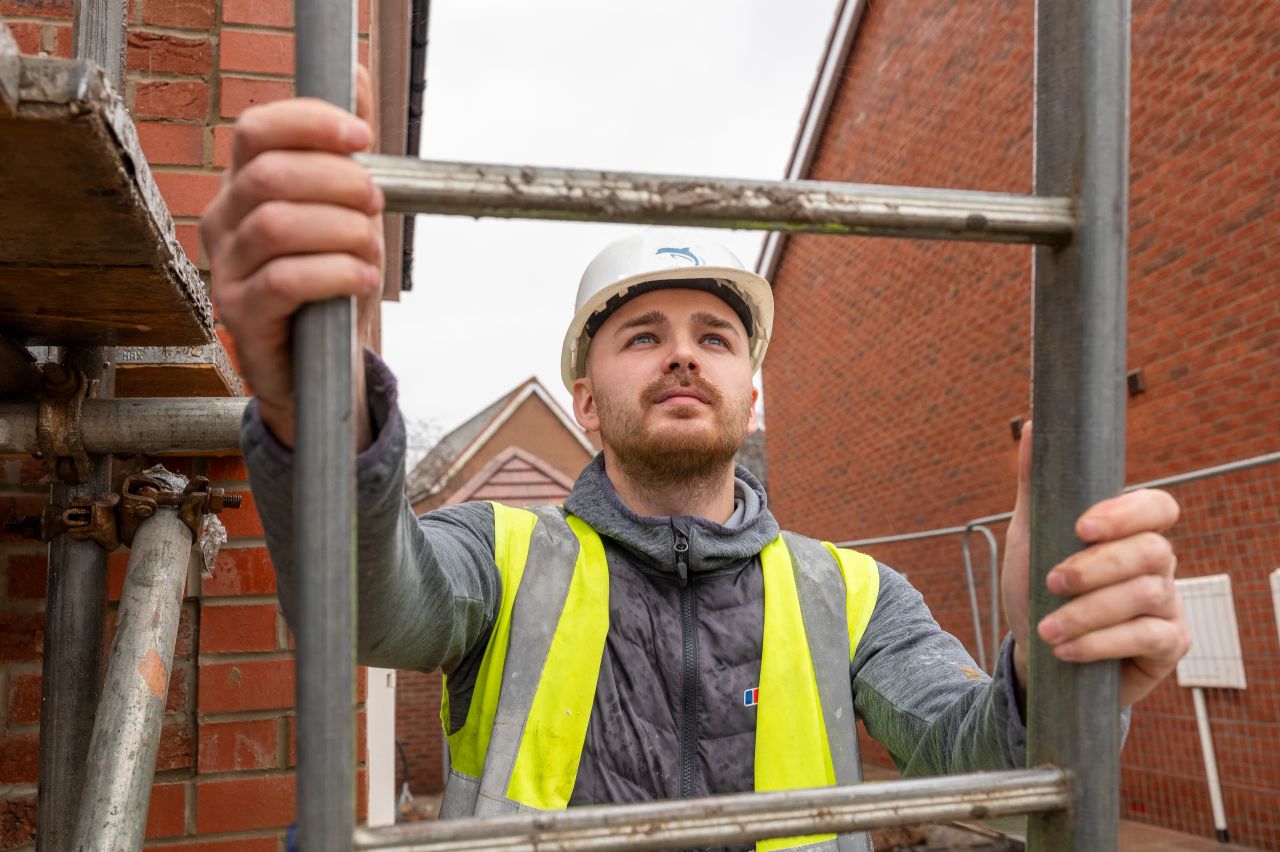
Scaffolders create temporary working platforms and access structures that help other trades build new homes safely.
Their work supports bricklayers, roofers and other specialists as a housing development progresses.

I would thoroughly recommend NHBC’s Apprenticeship scheme to anyone looking to develop a career in house building and I am certainly benefitting from being involved, even at this early stage.
Kris

Scaffolder introduction
Scaffolders create temporary working platforms and access structures that help other trades build new homes safely. Their work supports bricklayers, roofers and other specialists as a housing development progresses.
The role of a scaffolder in house building
On a residential development, scaffolders erect, adapt and dismantle scaffold structures to an agreed design or specification. They select components, check foundations and ties, establish safe access and respond when the build reaches a new stage. This is specialist safety-critical work: the scaffold must be suitable for its intended use and altered only by competent people.
A day in the life of a scaffolder
A working day could involve unloading and checking components, reviewing the scaffold plan, setting out base positions and assembling standards, ledgers and working platforms with your team. You may return to a completed scaffold to carry out an authorised alteration as brickwork or roofing progresses. Before leaving, you help keep the work area orderly and report defects or concerns.
Skills for a scaffolder
The following skills are particularly useful when working on new-home developments.
- Working safely at height — Correct access methods and fall-prevention measures protect workers and the public.
- Practical assembly skills — Components must be fitted in the right sequence and to the required specification.
- Spatial awareness — Scaffold structures need stable positioning around changing building shapes.
- Team communication — Scaffolders coordinate lifts, movements and handovers closely.
- Attention to detail — Missing or incorrectly fitted components can create serious risks.
- Physical fitness — The work involves handling equipment and working outdoors in changing conditions.
Routes into scaffolder work
Many scaffolders enter through the Level 2 Scaffolder apprenticeship or a structured trainee programme with a specialist contractor. College or pre-employment courses can help you prepare for an entry-level role. Progression is staged and depends on training, assessed competence and the type of scaffold work involved.
Qualifications and training
Skills England lists the Level 2 Scaffolder apprenticeship as typically 18 months of training plus assessment. The Construction Industry Scaffolders Record Scheme (CISRS) provides recognised industry training and card routes for scaffolding competence. Employers will also have specific safety and supervision requirements.
Scaffolder pay and earning potential
The National Careers Service gives an indicative annual range of £25,000–£51,000. Actual earnings depend on experience, location, employer, responsibilities and whether work is employed or self-employed.
Career progression
An experienced scaffolder may progress to advanced scaffolding duties, leading a scaffolding gang or supervising a team after further training and experience. Some people move into scaffolding planning, estimating or contract coordination, while others establish specialist contracting businesses.
Explore our career progression guide for a wider view of how house building careers develop.
Find scaffolder opportunities
Scaffolding contractors supporting housing developments offer trainee, apprentice and experienced positions. Look for vacancies that explain the training route, competence requirements and the kinds of structures you would work on.
Scaffolder FAQs
Scaffolders create temporary working platforms and access structures that help other trades build new homes safely. Their work supports bricklayers, roofers and other specialists as a housing development progresses.
A scaffolder erects, changes and dismantles temporary access structures so construction teams can work at height. On housing sites, this often supports brickwork, roofing and external finishing.
An apprenticeship or structured trainee programme with a scaffolding contractor is a common route. You build competence through practical training, supervision and assessment.
Working at height involves significant risks. Scaffolders follow strict procedures, use suitable protective equipment and must be trained and competent for the tasks they carry out.
The Construction Industry Scaffolders Record Scheme (CISRS) is an industry-recognised scheme covering scaffolder training, assessment and cards. Requirements depend on your stage of training and duties.
The National Careers Service gives an indicative annual range of £25,000–£51,000. Actual earnings vary with experience, qualifications, employer and the type of projects undertaken.